


· 7 min read
Parent moved into a care home? How to look after the empty house
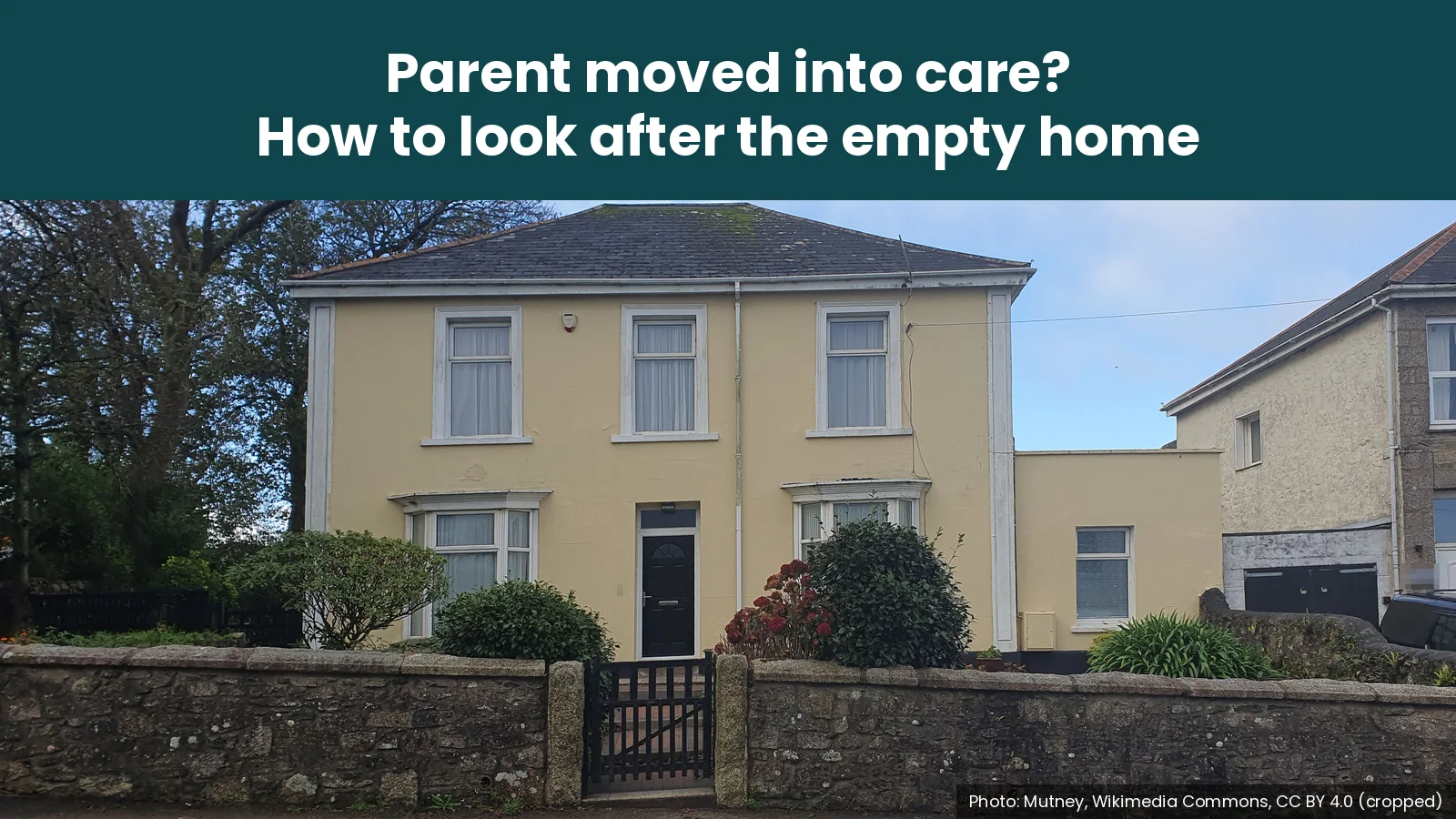

When a parent moves into a care home, the family house rarely gets sorted straight away. It might be sold, let or kept in case they come home, and deciding can take months. Meanwhile, the house is empty: still furnished, full of memories and, for insurance purposes, now unoccupied.
This guide is for adult children, relatives and anyone helping an older person who has moved into residential care, a nursing home, aged care or assisted living. It covers who can act, what to tell the insurer, how to share the visits, and how to keep a record that shows the home has been looked after.
Rules on insurance, tax and legal authority vary by country, insurer and policy. Treat this as a list of questions and tasks, then check the details for the country where the property is.
Check who can act for your parent
Before you ring the insurer, the bank or the utility companies, work out who is allowed to deal with them. If your parent can still make decisions, the simplest route is often for them to tell the insurer themselves, or to give permission for you to speak on their behalf.
If they can't, you'll usually need formal legal authority, and the form it takes depends on the country. In England and Wales, for example, that's a property and financial affairs lasting power of attorney, and GOV.UK notes that it's legally binding only in England and Wales, with a different process elsewhere (GOV.UK: lasting power of attorney). Other countries have their own versions, so ask a local solicitor or adviser if you're unsure.
Expect the insurer to ask for evidence of that authority before they'll discuss or change the policy.
Tell the home insurer about the move
This is the step most worth doing first. A home insurance policy is usually priced for a home that someone lives in, and many policies limit cover once nobody has lived there for a set period.
In the UK, the Financial Ombudsman Service says most home insurance policies stop covering certain events, such as theft, attempted theft, malicious damage or escape of water, if the home is left unoccupied for a period, usually 30 or 60 days (Financial Ombudsman Service: unoccupied properties). One UK insurer, AXA, tells brokers that if a policyholder goes into a nursing home or hospital, the policy can stay in force, but cover reduces once the unoccupied period in the wording has passed (AXA Connect: home FAQs).
In Canada, the Insurance Bureau of Canada advises letting your insurer know if a home will be unoccupied for more than 30 days, and says there may be conditions to meet, such as having someone check the home (Insurance Bureau of Canada).
The exact limits differ, so don't rely on any number you've read, including these. When you call, ask:
- How does the policy define "unoccupied", and when did that period start?
- Which cover changes or stops, and from when?
- Can the current policy continue, or is specialist unoccupied cover needed?
- Are regular inspections required? If so, how often, by whom, and what record should be kept?
- What does the insurer expect for heating and water over the colder months?
- Are there security conditions, such as locks or an alarm?
Ask for the answers in writing and keep them with the policy. If new cover is needed, make sure it starts before the old policy ends.
Make the house safe in the first week
A few practical jobs early on make every later visit easier:
- Secure it. Lock every door and window, find out who holds keys, and get spares back or change the locks.
- Find the controls. Know where the stopcock (main water valve), fuse box and boiler or furnace are, and how to use them.
- Deal with the post. Redirect it or collect it regularly, so a pile behind the door doesn't advertise an empty house.
- Clear the fridge and cupboards. Throw out food that will spoil, and unplug anything that doesn't need to stay on.
- Remove or record valuables. Take irreplaceable items, documents and medication somewhere safe, and note what stays.
- Photograph every room. This is your baseline: how the house looked on the day the routine began.
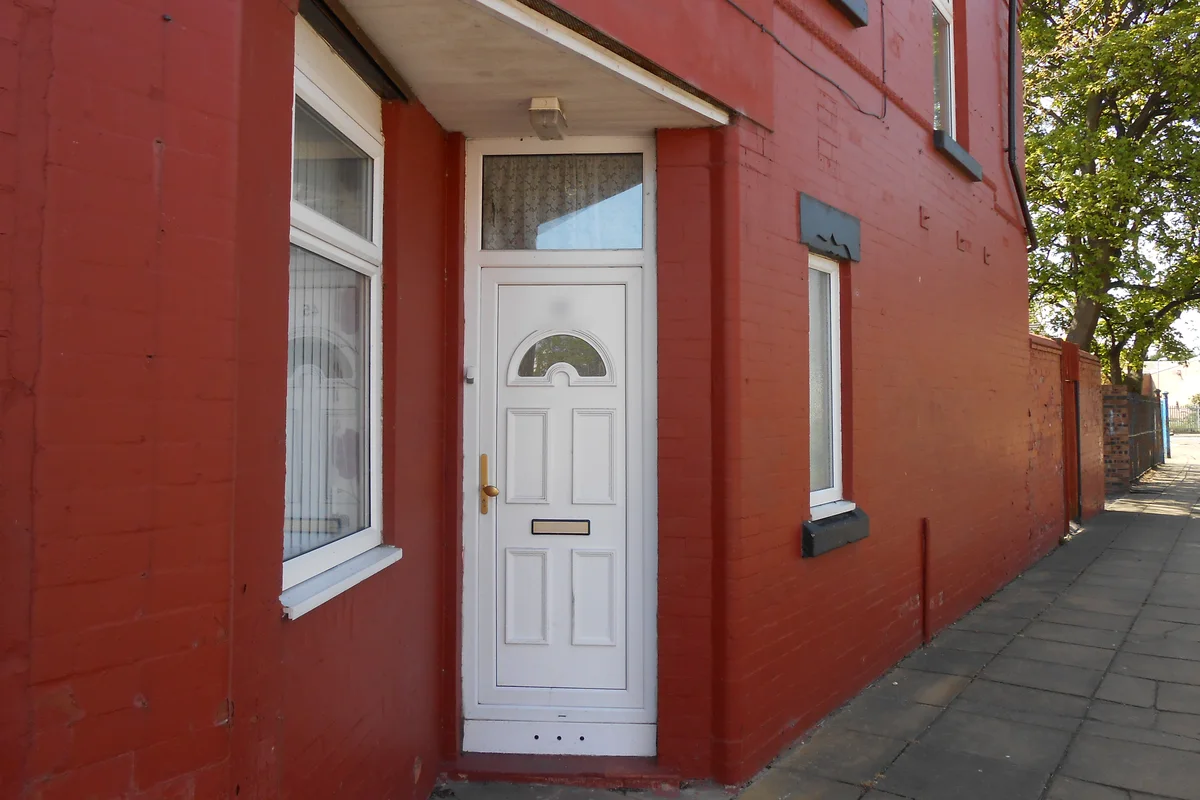
Start with the basics: lock up, and know who holds every key. Photo: "Front door in side of house, Seacombe" by Rept0n1x, via Wikimedia Commons, licensed CC BY-SA 3.0. Cropped, resized and house number blurred.

It's also worth checking local property tax rules. In the UK, for example, GOV.UK's Council Tax guidance lists the home of someone who has moved into a care home or hospital among the homes that don't get a Council Tax bill while they stay empty (GOV.UK: second homes and empty properties). Contact the local council to apply, and check the rules where the property is.
Set up a visit routine the whole family can share
Looking after an empty house often falls to whoever lives closest, and that can wear thin over a long wait. Sharing the visits spreads the load, as long as everyone knows the plan.
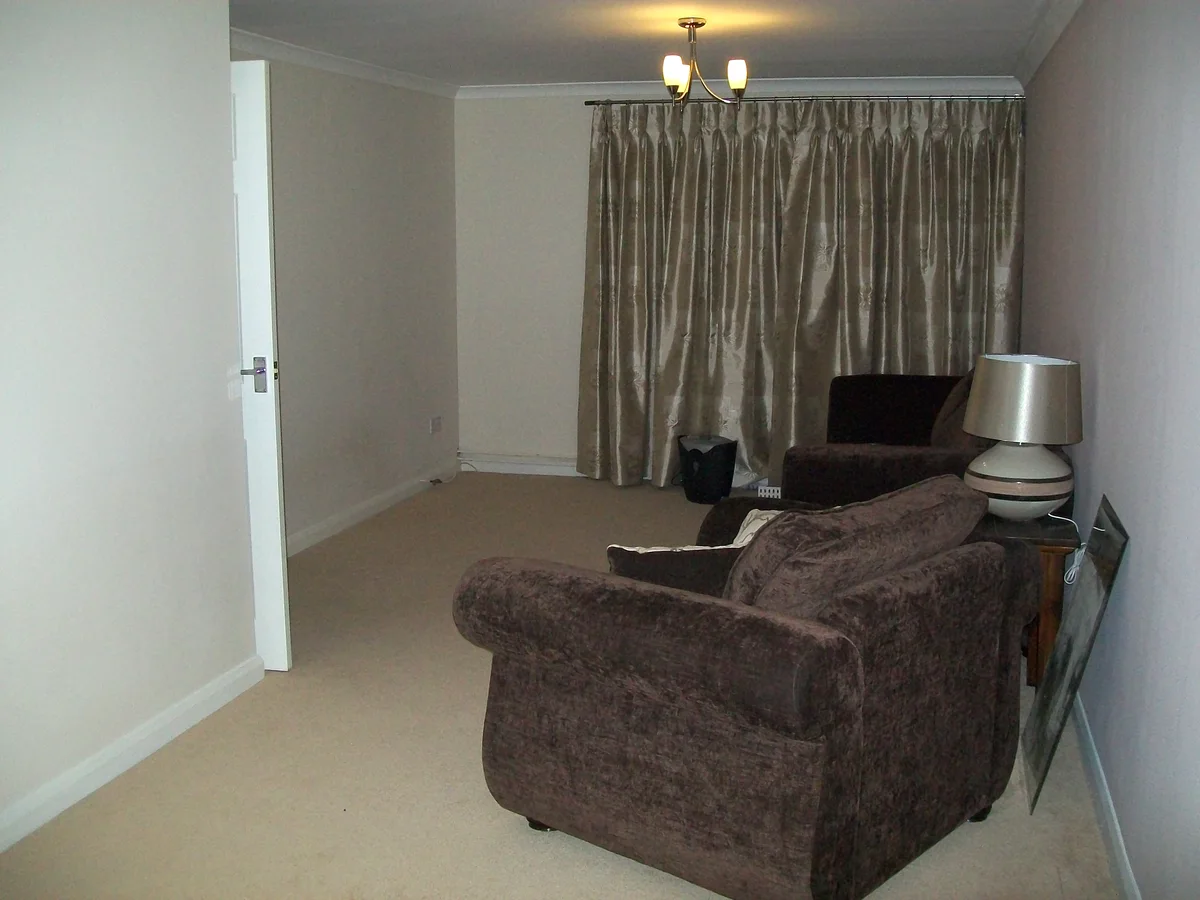
A house that's partly cleared still needs regular checks. Photo: "Living room" by AnemoneProjectors, via Wikimedia Commons, licensed CC BY-SA 2.0. Resized and lightly brightened.

- Agree how often someone visits. If the insurer sets an interval, that's your minimum.
- Decide who covers which weeks, and who steps in if someone is ill or away.
- Give a trusted neighbour your number and ask them to call if something looks wrong.
- Keep every visit in one shared place, so relatives who live far away can see the house is being looked after.
Keep a record of every visit
Visits do two jobs: they catch problems early, and they leave a trail showing the home was looked after. The Financial Ombudsman Service notes that it's unlikely to support a policyholder whose property has simply been abandoned or so neglected that it could invite unwelcome attention (Financial Ombudsman Service). A clear record of regular visits helps show the opposite.
For each visit, note:
- The date and time, and who went.
- What was checked, inside and outside.
- What was found, with photos taken from the same spots each time.
- What was done about it, and who was told.
Keeping this in one place matters more than the format. Inspection Record lets you set the interval your insurer gives you, sends reminders when a visit is due, and stores dated photos and notes for every inspection, on the web or in the app for iPhone and Android. It compiles them into a single record you can share with your insurer if they ask. A record shows what was done; it can't guarantee that a claim will be paid, so always follow your policy's conditions. See how it works for families after a care home move.
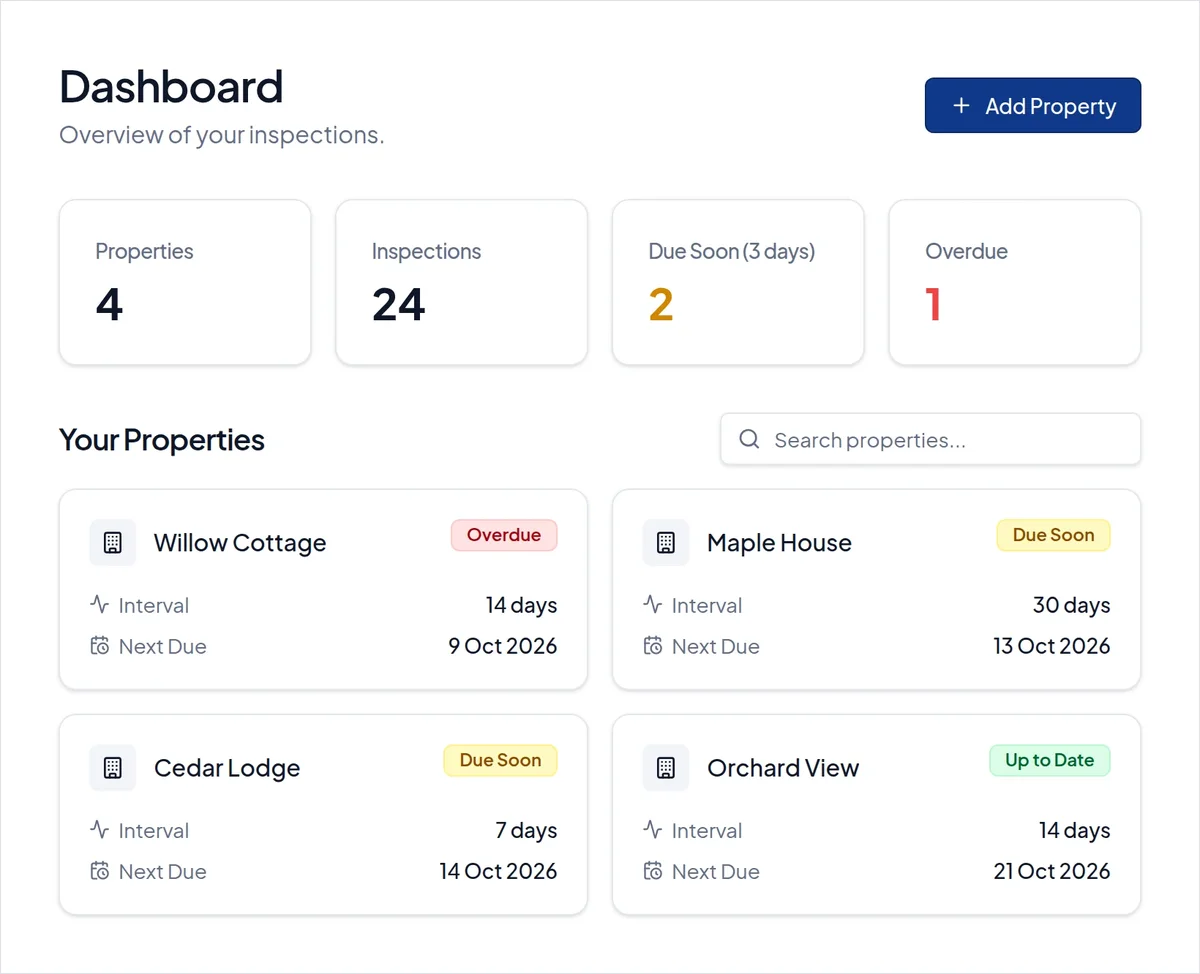
The Inspection Record dashboard shows every property's visit interval, when the next inspection is due and anything overdue. Screenshot: Inspection Record (sample data).
When plans change: selling, letting or coming home
Tell the insurer whenever the plan changes. Selling, letting to tenants, starting building work or a parent returning home can each change the cover needed.
- Selling: keep suitable cover in place until completion, and keep up the visits while viewings happen. Our guide to selling an empty property covers this stage.
- Letting: a rented home normally needs landlord cover rather than a standard home policy.
- If your parent dies: the house may then pass into probate, with new rules on who can act. Our probate checklist for unoccupied property explains what to do next.
FAQ
Is the house unoccupied if Mum or Dad might come home?
Usually, yes. Insurers tend to look at whether anyone is living there now, not whether someone might return. Explain the situation honestly and ask how the insurer treats it.
Do family visits stop the house counting as unoccupied?
Not necessarily. Collecting post or spending an afternoon there is different from living there, and occasional overnight stays may not count either. Ask the insurer how they treat visits, and get the answer in writing.
Should we turn the water off or keep the heating on?
It depends on the policy. Some insurers ask for the water to be turned off and the system drained; others want the heating kept at a set minimum during colder months. Agree which applies before the cold weather arrives.
How often should someone check the house?
If the insurer sets an interval, follow it. If not, agree a regular routine with the family and step it up after storms or heavy rain. There's no single safe interval for every home; our page on why empty property inspections matter explains why.
Can I manage the insurance for my parent?
Only if they've given permission or you have legal authority to act for them. The insurer will usually ask for evidence before discussing the policy with you.
Looking after a parent's empty home? Start a free 14-day trial of Inspection Record. No card is needed.
Sources
- Financial Ombudsman Service (UK), Unoccupied properties: https://www.financial-ombudsman.org.uk/businesses/resolving-complaint/complaints-deal/insurance/home-buildings-insurance/unoccupied-properties
- AXA Connect (UK broker site), Home FAQs: https://www.axaconnect.co.uk/personal-lines/home-insurance/home-faqs/
- Insurance Bureau of Canada, What is covered when I go on a March Break vacation?: https://www.ibc.ca/news-insights/in-focus/what-is-covered-when-i-go-on-a-march-break-vacation
- GOV.UK, Make, register or end a lasting power of attorney: https://www.gov.uk/power-of-attorney
- GOV.UK, How Council Tax works: second homes and empty properties: https://www.gov.uk/council-tax/second-homes-and-empty-properties