
July 2026 · 7 min read
How often should you inspect an empty property awaiting renovation?
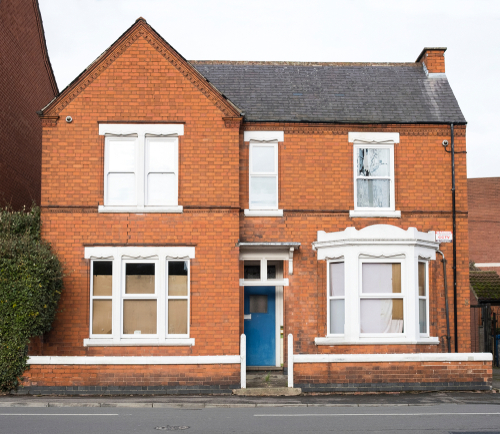
If you own an empty property that's heading for renovation, there's usually a long stretch before any work actually starts. Throughout that period, the property is insured on an unoccupied property policy — and that policy almost certainly contains an inspection condition.
Once the builder starts on site, the project typically moves onto the contractor's works insurance policy. But until that handover, the inspection condition is yours to meet — a requirement to visit the property at a fixed interval and, crucially, to be able to prove that you did. It's one of the most overlooked clauses in unoccupied property insurance, and one of the most common reasons claims are reduced or refused.
Unoccupied cover before the works, works insurance after
It's a common misconception that an unoccupied property policy covers a property all the way through a renovation. In practice, it covers the period before work starts: the months spent meeting the architect, carrying out the visits needed to identify the works, applying for planning permission, drawing up the schedule of works and going to tender to secure the contract with the builder undertaking the project.
Once that contract is in place and the builder starts, the project normally transfers to the builder's works insurance policy (often called contract works or contractors' all-risks cover). Confirm the handover date with your broker so there's no gap — but for the whole pre-works period, the property stands empty, and your unoccupied insurer expects it to be inspected regularly.
What your insurer actually expects
The wording varies, but unoccupied property policies typically require:
- Inspections at a stated interval — most commonly every 7 or 14 days, occasionally 30 for low-risk properties.
- Inspections carried out by you or a nominated responsible adult — not simply assumed because the architect or a surveyor has been round.
- A record of each visit: the date, who attended, what was checked and what was found.
- Prompt action and notification when a problem is discovered — finding a leak is only half the job; insurers expect it dealt with and reported straight away.
So how often should you inspect?
The honest answer is: whatever your policy schedule says — that number overrides any general advice. But as a guide to what's typical across the market:
- Every 7 days where the policy demands it, or where the risk is higher — winter months, previous break-ins, or a property that isn't fully secure.
- Every 14 days as the common default for a secure, weathertight property waiting for planning permission or tender responses.
- Every 30 days only where the policy explicitly allows it, usually for low-risk, well-secured properties.
What to check on every visit
A consistent routine makes each inspection quick and each record comparable. On every visit, check and photograph:
- All external doors, windows and any security measures — signs of attempted entry included.
- The water stopcock and any isolated or drained-down services, plus visible pipework in kitchens, bathrooms and lofts.
- Electrics: the consumer unit and anything left powered.
- Signs of damp, leaks or weather ingress — ceilings, around windows, and in the loft.
- Post, bins and the garden — anything that signals to passers-by that the property is empty.
- The exterior: roofline, gutters, and anything a storm has moved since last time.
Records that stand up to a claim
When a loss adjuster reviews an unoccupied property claim, the inspection condition is one of the first things they test. A verbal assurance that 'someone was there most weeks' carries little weight. What works is a contemporaneous record: dated entries, made at the time of the visit, with photographs that are demonstrably from that visit.
This is exactly what Inspection Record produces. You set the interval your policy requires, get reminded before each visit falls due, log photos and notes as you walk the property, and every entry compiles into a formal, print-ready record — dates, photos, notes and a signature line. If the worst happens while you're still waiting for the builder to start, the question 'can you prove the property was being inspected?' has a one-page answer.
The bottom line
Read your policy schedule, set the interval it demands, and keep a photo-backed, dated record of every single visit until the builder starts and cover moves to their works insurance policy. The inspections protect the property; the record protects the claim.