
12 October 2026 · 6 min read
Autumn prep for an unoccupied property: a mid-October inspection checklist
Published by Inspection Record
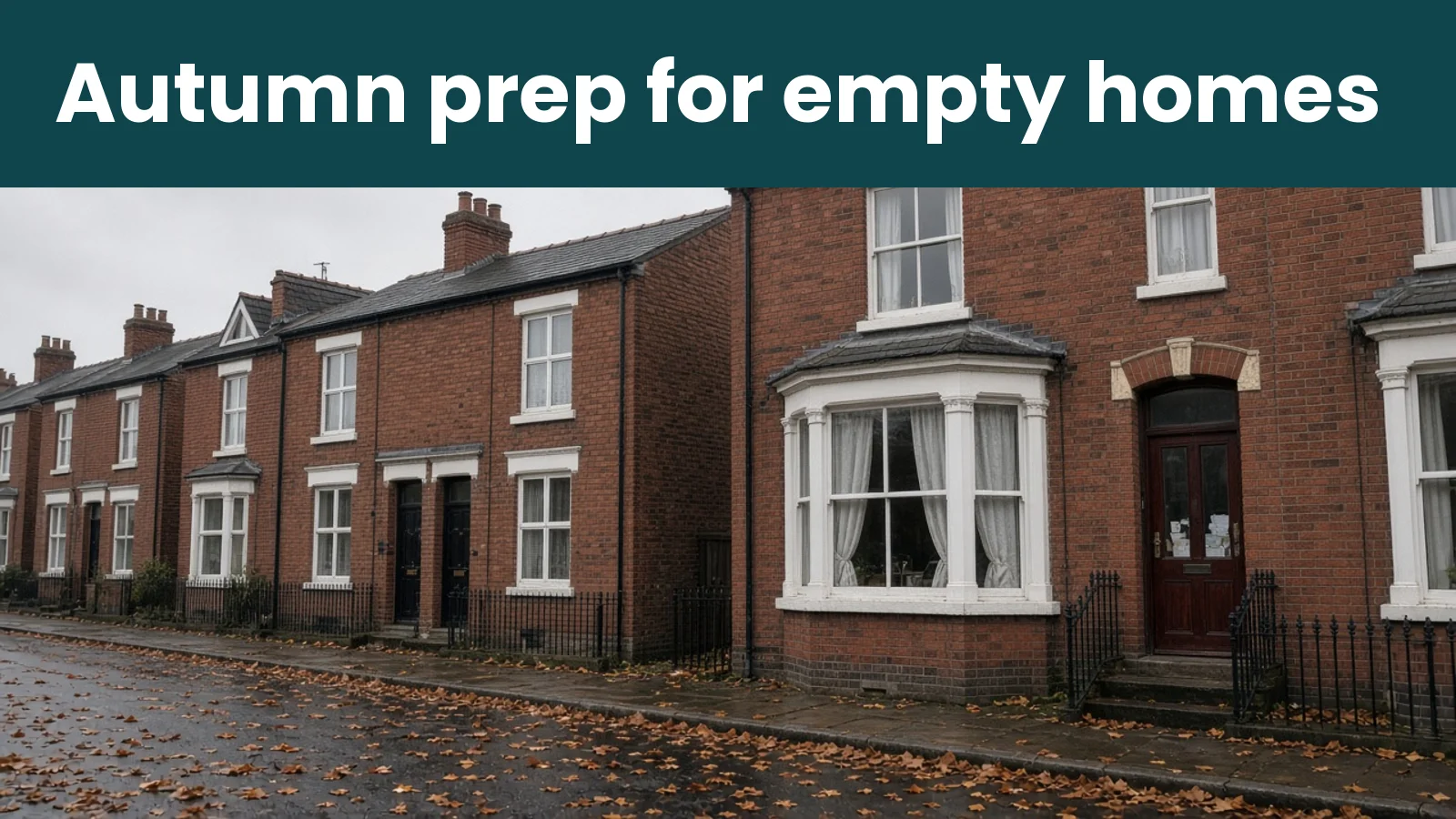
Mid-October is when empty homes start to feel the season. Days shorten, leaves fill gutters, and roofs take more wind and rain. If you are renovating, managing probate, waiting between tenants or looking after a second home, this is a good moment to tighten your inspection routine before a wet, windy spell arrives when nobody is on site.
Seasonal forecasts cannot tell you which day a storm will hit your street, but they can flag a shift in risk. The Met Office’s autumn 2026 outlook for the UK has pointed to a higher-than-usual chance of wetter, warmer conditions, with windy and potentially stormier weather more likely later this autumn into early winter (Met Office long-range blog, September 2026). That is not a named-storm forecast; it is a nudge to check the roof, gutters, drainage and security while daylight and dry access still help. Wherever your property is, the principle holds: deal with the autumn weather now, and plan for the cold months before they arrive.
Below is a practical autumn checklist for inspections of unoccupied property. Treat it as a prompt list, then match every action to your policy wording. Inspection intervals, heating temperatures and drain-down rules vary by insurer and endorsement.
1. Clear gutters, downpipes and drains
Falling leaves are the October problem. A single blocked downpipe can send rainwater down a wall, into the brickwork and through to the inside.
- Clear gutters and downpipes of leaves and moss; check that brackets and joints are secure.
- Confirm water discharges away from walls and foundations, not into a pool by the back door.
- Lift leaves off drain gullies, yard drains and any flat roofs or balconies.
- Rake leaves away from air bricks and door thresholds.
Homeprotect’s escape-of-water guidance lists clearing gutters alongside regular checks and a simple record (Escape of water guide).
2. Storm and rain checks on every visit
Wetter, windier spells raise the chance of water getting in through the building itself, not only from the plumbing. On each visit, and especially after a gale:
- Walk the roofline from the ground: slipped tiles, lifted flashings, leaning chimney pots, loose aerials.
- Check loft spaces for damp patches, daylight through the roof, or wet insulation.
- Look at window seals, failed pointing, and any temporary boarding or tarpaulins from renovation work.
- Inspect basements, cellars and ground-floor corners for new damp staining.
- Secure or remove loose items in the garden: bins, ladders, scaffold boards, garden furniture.
- Note overhanging branches that could fall on the roof or a neighbour’s fence.
Photograph issues with the date in your log. A small leak becomes rot, mould and an electrical risk when nobody is there to notice the smell.
3. Security and the “lived-in” look
Storms loosen fences, blow gates open and scatter debris that signals an empty plot. Darker evenings also make an unlit house stand out. Include:
- Doors, windows, garages and outbuildings: locks, hinges and any signs of forced entry.
- Alarm and sensor batteries; confirm monitoring still works if you rely on it.
- Timer switches for lights now that it is dark earlier.
- Post, parcels and flyers: clear them every visit, so the hallway does not advertise that the home is empty.
- Gardens and bins: overgrown lawns, unmoved bins and broken fencing are quiet invitations.
- Keys and access for whoever inspects: a trusted person who can get inside, not only drive past.
4. Read the winter clauses now, not in January
Many unoccupied-property policies treat the colder months differently from the rest of the year, especially for escape of water. Some wordings ask you either to turn off the water and drain the system, or to keep thermostatically controlled heating running at a stated minimum temperature. Others restrict escape-of-water cover over winter unless inspections and records meet their rules. Mid-October is the time to find out which applies to you.
Public guidance reflects that variation. Intelligent Insurance notes that inspection frequencies commonly fall around every 7, 14 or 30 days depending on the policy, and that a drive-by is often not enough: insurers typically expect access so obvious internal issues can be spotted (How often must an unoccupied property be inspected for insurance?).
Action: find the endorsement or schedule line covering unoccupancy, heating, water and inspection frequency. Note the dates the winter conditions start and any temperature or drain-down method. Do not assume a neighbour’s policy matches yours.
5. Plan heating or drain-down before the cold months
Freezing is not an October risk in most places, but frozen and burst pipes are a real later-winter risk for an empty home. The time to plan for them is now, while plumbers and heating engineers have availability.
- Heating on: only if your policy allows it, and only if the system can run reliably with no one living there. Book a boiler service, check fuel supplies, set the thermostat to match the wording, and make sure warm air can reach lofts, under-sink cupboards and pipes on cold external walls.
- Drain-down: often the safer option for long absences, ideally carried out by a qualified plumber. Homeprotect’s guide suggests turning water off at the stopcock for longer absences and either keeping heating on low in cold weather or arranging a proper drain-down. Plan how trades will get water for short renovation jobs.
- Either way: lag exposed pipes in lofts, garages and under suspended floors, and know where the stopcock is before you need it.
6. Make the inspection count and keep the paper trail
A useful inspection is short, consistent and recorded. A simple pattern:
- External walk (roof, gutters, drains, openings, garden, security).
- Internal walk (smell for damp, check wet rooms, loft, stopcock area, heating status).
- Note defects and the date you will fix them.
- Keep dated photos of key rooms and any problem areas.
Many policies expect inspections at fixed intervals and a record that can be shown if a claim is queried. Intelligent Insurance’s guide stresses that inspection conditions are often strict time intervals, so “nearly” meeting them may still cause problems, and that dated notes or photographs help show that visits took place.
If you want one place for photos, checklists, due dates and an insurer-ready summary, Inspection Record keeps it all organised. Notebook or app, the principle is the same: show that you looked, when you looked and what you found.
A mid-October mini plan
This week, if the property will sit empty through autumn and winter:
- Clear gutters, downpipes and drains of leaves.
- Check the roof and secure temporary works before the next wet spell.
- Re-read the unoccupancy and escape-of-water wording.
- Choose heating or drain-down and book the boiler service or plumber now.
- Diary the next inspection dates at the interval your policy requires.
- Start (or tidy) a dated photo log from today’s visit.
Autumn prep for an unoccupied property is less about predicting the weather and more about removing single points of failure: one blocked downpipe, one loose ridge tile, one week without anyone stepping inside. Mid-October is early enough to fix those quietly, and to have the winter plan ready before the cold arrives.